

Edible Cities
Working together,
growing together
Edible Cities designs and fabricates circular urban growing systems that combine food production, composting and community participation. Our systems transform organic waste into valuable compost while creating productive green spaces where people can grow food, learn, and reconnect with nature.
How does it work
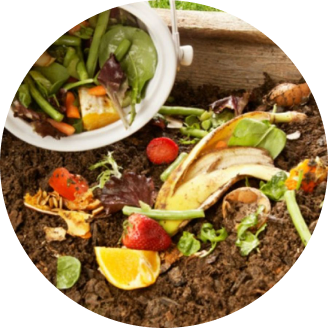 Users add their kitchen scraps to the vermicompost chamber as their green bin.
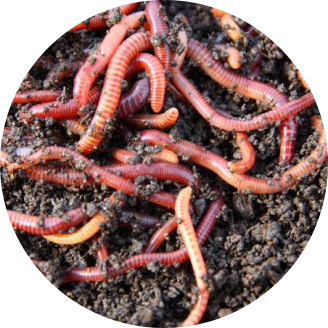 Worms transform the organic waste into nutrient-rich compost.
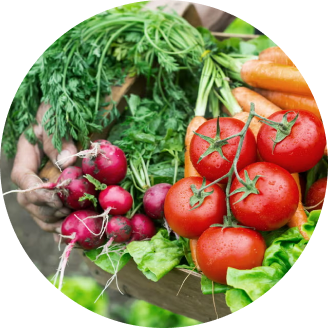 Those nutrients feed the plants growing in the vertical garden.

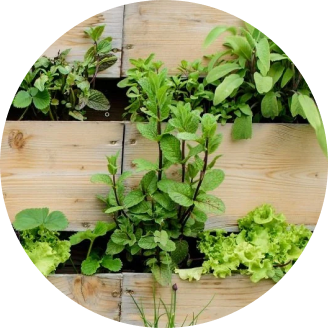 Grow between 60-70 plants, suitable for daily use by 3 to 6 families.
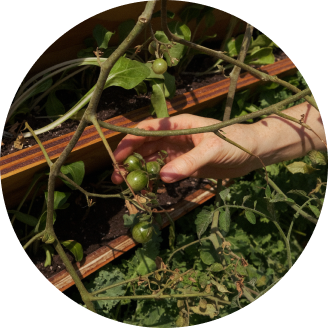 Harvest fresh vegetables and herbs from your vertical garden every day.
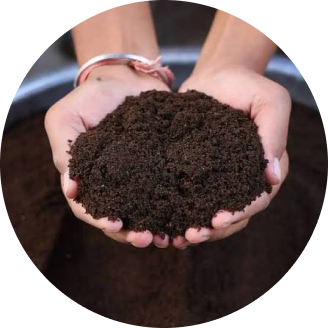 Harvest vermicompost for your garden at least 3 times a year.
Easy assembley
1. Set Up in 3 Hours: 1m x 1m x 1.60m high, designed for two people to assemble together.
2. Easy to run together: We provide simple roles, shared logs, step-by-step instructions and practical guidance to coordinate — so even with many people, everything stays very easy.
3. Grow with guidance: Practical tutorials for every step of the journey.

Benefits & impact
-
01
Reduces organic waste sent to landfill
Reducing methane emissions and making local climate action tangible
-
02
Nutrient rich vermicompost
With circular resource flowing in one decentralised urban system.
-
03
Kilometre-zero food production
Reducing dependance on long and opaque food supply chains.
-
04
Nature-based urban infrastructure
Reducing the heat and adding value to dense areas where access to soil and growing space is limited.

Who is it for
- Residential Buildings & Shared Spaces

- Municipalities & Public Spaces
- Community Spaces
- Schools & Universities
Edible Cities developed, installed and tested its first community-scale systems in Barcelona and Nancy. These are the first sites in a growing network of communities rethinking how urban spaces can become greener, beautiful, creating innovative spaces for people to take part.
The project reflects EU-funded LAUDS' vision of local, accessible, digital and sustainable manufacturing: creating practical systems through local collaboration, circular-material thinking, open knowledge and real-world testing.


Edible Cities was developed through the EU-funded LAUDS Factories Open Call, in response to the challenge “From Waste to Resource: community-driven food waste valorisation solutions.” with Lorraine Smart Cities Living Lab / Fab Living Lab Université de Lorraine, AKASHA Hub, and Citysens.
Meet the team
LAUDS "Local Accessible Urban Digital Sustainable" Factories is a Horizon Europe research and innovation action co-funded by the European Union.
Lorraine Smart Cities Living Lab / Fab Living Lab is a collaborative innovation platform at the Université de Lorraine.
AKASHA Hub is a citizen-driven infrastructure for social innovation, built on community, shared knowledge, and interdisciplinary collaboration to develop projects and tools with social impact and urban regeneration.
Citysens is an innovation-driven SME specialised in modular urban gardening systems with a strong climate and social inclusion impact.
-
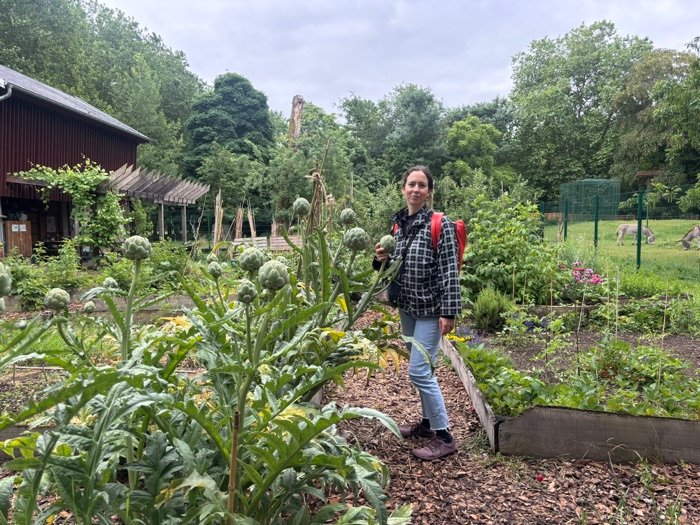
María Paz Gardiazábal
Project Manager
-
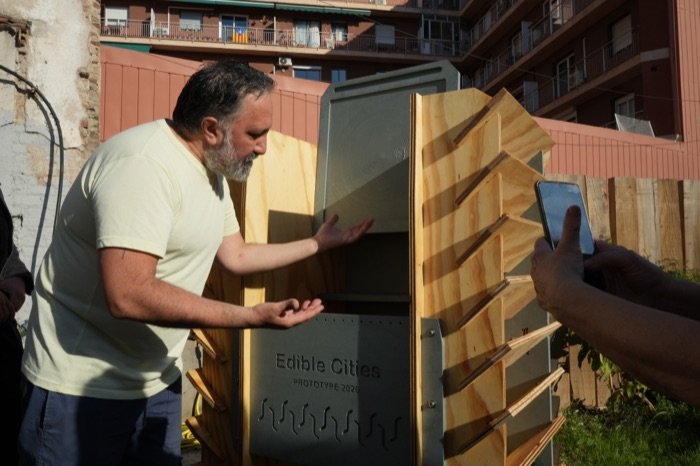
Felipe Araya
Industrial designer
-
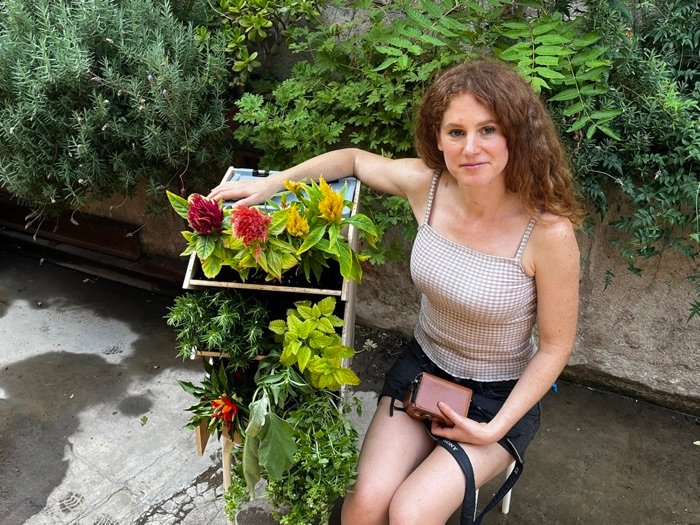
Beatriz Irarrázabal
Community coordinator
-
Phil Cummins
Technology Advisor
-

Carmen Tanaka
Akasha Hub Barcelona


Open-Source Community Edition
Edible Cities is an open-source, community-focused design, developed to help communities, schools, neighbourhood groups, housing cooperatives and civic organisations replicate the system for non-commercial, community benefit purposes.
Commercial use is not permitted. The Edible Cities design, files and documentation may not be used to manufacture, market, sell, distribute or offer the system, or derivative versions of it, for commercial purposes without prior written permission from Edible.

Download the final files for local CNC fabrication. By downloading these files, you agree to use them only for non-commercial, community-benefit purposes and to credit Edible Cities as the original design. Read the Community Replication License.